Getting Document Disposal Right in Australia
Whether we like it or not, sensitive information still exists on paper. Contracts are signed. Reports are printed. Employee records are filed. Over time, paper accumulates quietly across offices, archive rooms, and storage facilities.
At the same time, privacy and information handling expectations continue to increase. The Office of the Australian Information Commissioner publishes ongoing reporting on notifiable data breaches, with information handling and human error appearing as consistent contributing factors.
At a fundamental level, the Australian Privacy Principle 11 requires organisations to take reasonable steps to destroy personal information once it is no longer needed, unless retention is required by law. Similarly, for government information, the National Archives of Australia define destruction as complete and irreversible, supported by authorised disposal and appropriate documentation.
Organisations that handle sensitive paper often arrive at the same set of questions. What should be destroyed? When is destruction allowed? How should disposal be performed? How is proof maintained? The sections below walk through these considerations in practical terms.
Why does paper still create information risk
Many organisations invest heavily in cybersecurity, access control, and digital governance (as they should). In many cases, paper often sits outside these frameworks.
Documents move between desks, meeting rooms, printers, and filing cabinets. Boxes are stored for future reference. Older records remain untouched because ownership is unclear. Over time, uncertainty grows around what exists and how it is handled.
OAIC guidance notes that retaining personal information longer than necessary increases privacy risk. Reducing unmanaged information lowers the potential impact of a breach.
It’s clear then that secure disposal practices help remove sensitive paper from uncontrolled environments and introduce predictability into information handling routines.
What documents typically require secure disposal
A useful way to assess this is to consider impact.
If a document was found in general waste, would it create inconvenience, embarrassment, financial harm, or legal exposure for an individual or organisation?
If the answer is yes, secure disposal is usually appropriate.
Common examples include:
- Employee and payroll records
- Customer onboarding forms
- Financial statements and invoices
- Printed emails containing personal data
- Medical and patient records
- Legal files and contracts
- Archived client folders
OAIC privacy guidance reinforces the importance of destroying personal information once it is no longer required.
Many organisations create a simple internal reference list, so staff know what belongs in secure disposal streams. Check out this page for more information on what can and should be securely destroyed.
When can documents be destroyed
Timing is one of the most important aspects of compliant disposal. Destroying records too early can create audit, legal, and operational risk. Retaining records too long increases privacy exposure and storage overhead.
National Archives guidance requires organisations to confirm:
- Minimum retention periods have been met
- No legal hold or investigation applies
- No access request is outstanding
- The record is no longer required for business purposes
It’s important to also note that the OAIC guidance clarifies that destruction obligations do not apply where Australian law requires retention.
Many organisations align their secure disposal programs with retention schedules to remove guesswork from the process. Tools like Lifecycle (formerly Virgo) can help organisations stay on top of retention and information governance, making regulatory compliance easier to maintain.
What makes document destruction secure
Security is created by process rather than equipment alone.
The National Archives Guidance describes compliant destruction as complete and irreversible, supported by controlled handling and appropriate documentation. In other words, this means records must be destroyed in a way that prevents reconstruction, with documented processes showing when and how disposal occurred.
Secure destruction commonly includes:
- Controlled collection of materials
- Restricted access prior to destruction
- Documented chain of custody
- Secure transport where applicable
- Supervised destruction
- Recorded confirmation of completion
These steps allow organisations to demonstrate that disposal occurred in a consistent and defensible manner. When selecting a secure destruction service provider, end-to-end process control should be treated as a core requirement in evaluation.
How is proof of destruction maintained
Proof matters when audits, investigations, or privacy complaints arise. Beyond regulatory requirements, evidence of the permanent destruction of sensitive material supports accountability and reduces uncertainty in how information risk is managed.
National Archives Guidance states destruction records should identify:
- What was destroyed
- When destruction occurred
- How destruction was performed
- Which authorised disposal class applied
Certificates of Destruction (COD) provide documented evidence that disposal occurred under controlled conditions. They support audit readiness and internal risk reporting processes.
Does shredding location affect security
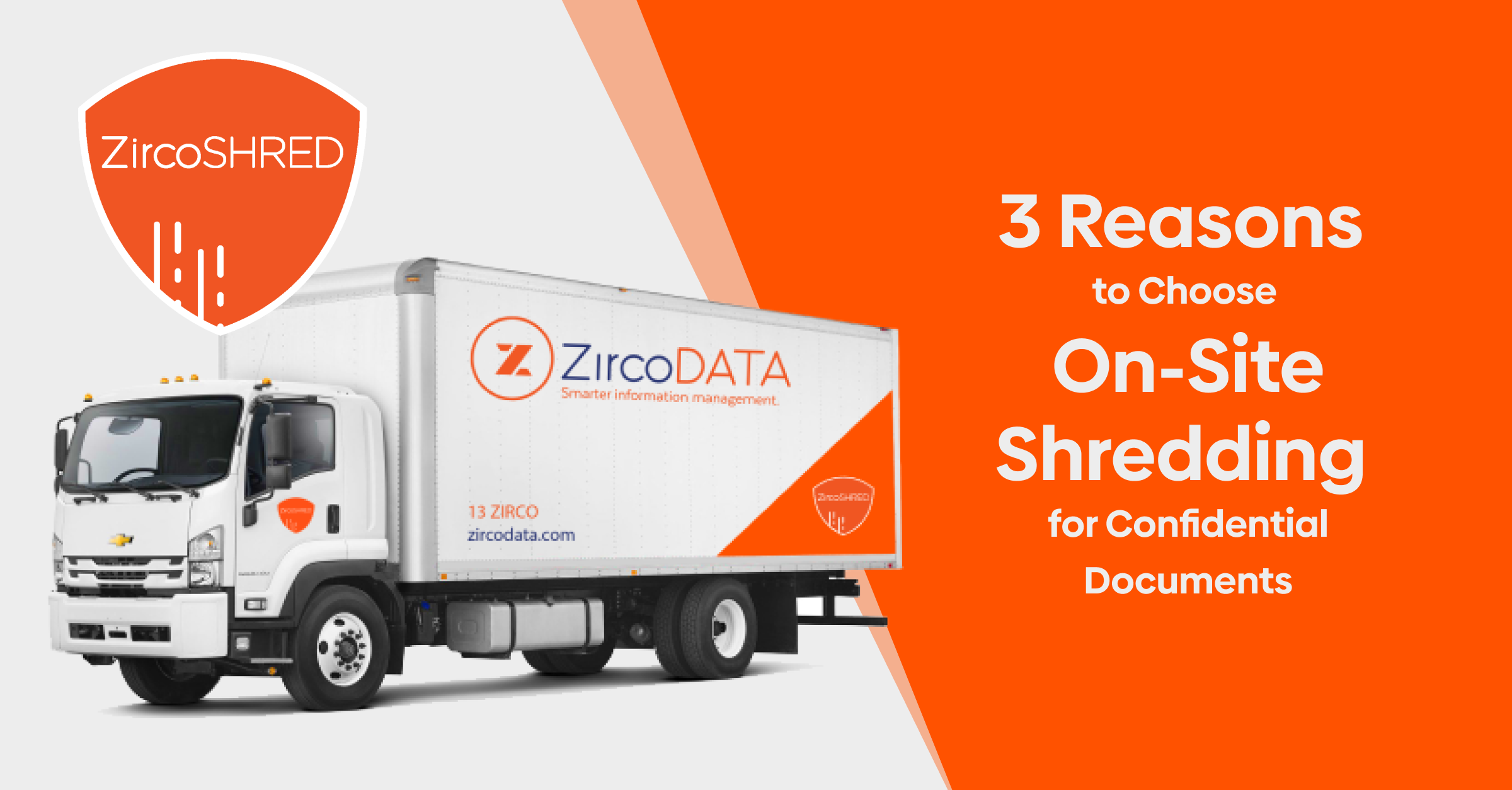
Organisations often consider whether destruction should occur on-site or off-site. Mobile on-site destruction provides immediate disposal and direct visibility. Off-site destruction can provide scalability and efficiency when supported by secure transport and controlled facilities.
Security outcomes depend on:
- How materials are contained
- Who has access before destruction
- How custody is recorded
- How destruction is supervised
- How proof is issued
The focus remains on controls and documentation rather than physical location. Choosing a trusted, certified, and compliant destruction partner ensures information is handled securely and disposed of with documented assurance, whether shredding occurs on-site or off-site.
What role does NAID AAA certification play
Certifications help organisations understand whether destruction processes are independently audited. In a market where many providers claim secure handling, independent verification provides clarity and confidence in what sits behind those claims.
i-SIGMA describes NAID AAA Certification as verifying secure data destruction providers through scheduled and unannounced audits and defined compliance requirements.
For organisations handling higher sensitivity information, certifications provide additional assurance that controls are reviewed regularly. This helps strengthen internal governance and supports external compliance expectations.
How often should secure disposal occur
Frequency influences exposure.
If sensitive paper accumulates over long periods, uncertainty grows around volume and location. More frequent disposal reduces unmanaged handling and keeps workspaces organised.
Common approaches include:
- Weekly or fortnightly collection in high sensitivity environments
- Monthly collection in standard office settings
- Periodic purge services during EOFY or project transitions
OAIC reporting continues to show human error as a contributing factor in breach incidents, reinforcing the value of predictable handling processes. If you need assistance determining secure destruction frequency, click here.
What should organisations look for in a disposal partner
Choosing a secure disposal partner is an extension of an organisation’s information governance framework. The right provider supports consistency, accountability, and documented assurance across disposal activities, which makes evaluation of process maturity an important first step.
These useful evaluation points include:
- Chain of custody controls
- Secure containment prior to destruction
- Transport handling procedures
- Destruction supervision
- Proof of completion
- Audit or certification evidence
- Ability to support both routine and one-off disposal
Managing secure disposal becomes simpler when roles, processes, and documentation are clearly defined. Handling sensitive paper responsibly is now a core part of information governance. Australian regulations set expectations around destruction, recordkeeping, and privacy obligations. Organisations that build consistent disposal routines, align them to retention requirements, and maintain proof of destruction gain stronger control over information risk.
ZircoDATA delivers secure, documented destruction services that help organisations maintain certainty in their disposal practices.
If you would like to arrange secure destruction services or receive a free quotation, you can get in touch with ZircoDATA here.